Executive & AI Advisory
For CEOs, founders and leadership teams shaping AI, technology and transformation priorities.
Explore advisory →Data scientist, AI and technology consultant, GTM and revenue strategist, researcher, educator and global entrepreneur helping leaders turn complexity into practical business outcomes.


Use data, research and structured decision systems to understand markets, products, customers and technology choices with greater clarity.
Explore data science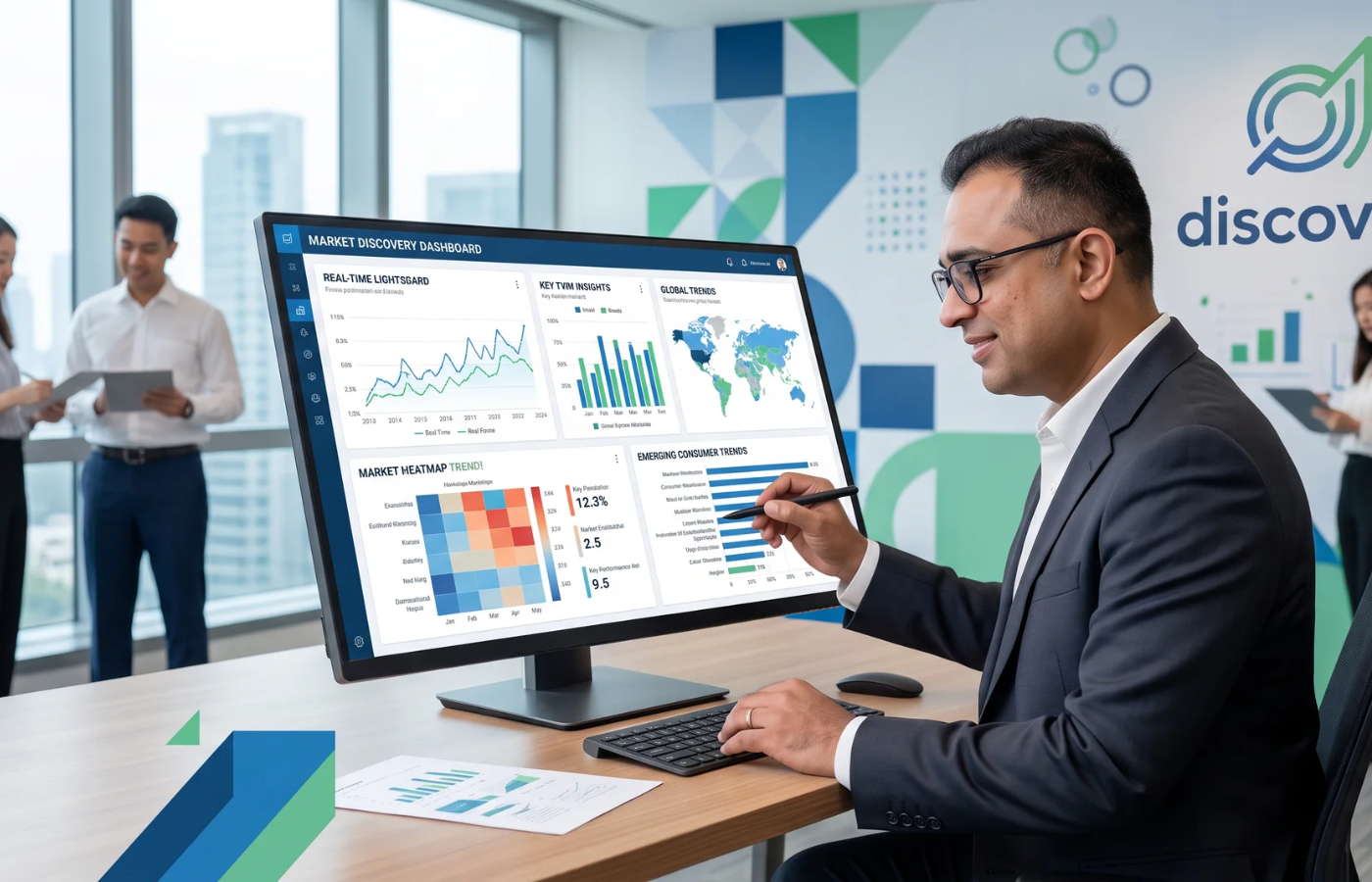
Translate AI, automation and emerging technology into practical strategy, implementation priorities and executive decision support.
Work on AI strategy
Build stronger routes to market, demand systems, AI visibility, sales workflows and growth strategies around measurable business outcomes.
Explore growth consulting
Connect market-entry thinking, international business intelligence, innovation and entrepreneurial decision-making across major commercial ecosystems.
Explore global business
Turn complex research into usable frameworks, learning pathways and executive education across AI, data science, business and innovation.
Learn with RahulChoose the pathway that matches the problem you need to solve. Each route connects strategic thinking with a practical next step.
For CEOs, founders and leadership teams shaping AI, technology and transformation priorities.
Explore advisory →For teams improving discoverability, pipeline, conversion, market entry and revenue systems.
Explore growth →For professionals, researchers and executives building practical capability and stronger decision frameworks.
Explore learning →
Research-led thinking for high-stakes business and technology decisions.
From executive strategy to workflow, search visibility and implementation.

Market entry, entrepreneurship, mobility, intelligence and growth pathways.
MeetRahulDev.com is designed around a practical premise: difficult business and technology decisions rarely belong to a single discipline. An AI initiative can be a technology question, but it can also be a data question, an operating-model question, a revenue question, a risk question and a capability-building question. The advisory model therefore starts with the decision that needs to be made, not with a tool that needs to be sold.
This approach also shapes how research appears across the site. Each major topic is intended to connect a clearly defined user need with evidence, practical implications and a next action. It is a decision system in which an executive, founder, researcher or professional can move from understanding the problem to evaluating options and, when appropriate, to a consultation, assessment, learning pathway or deeper research resource.
Organizations often encounter AI through products, models or vendor demonstrations. A stronger starting point is to define the business process, decision, customer experience or knowledge task that should improve. That makes it possible to ask what data is available, what level of automation is appropriate, where human review remains necessary, what risks need to be managed and how success will be measured. The NIST AI Risk Management Framework similarly treats AI risk management as an organizational activity spanning the design, development, use and evaluation of AI systems, rather than as a narrow model-selection exercise.
For consulting work, this means separating three questions that are frequently mixed together: what should be automated, what should be augmented, and what should remain primarily human-led. The answer depends on the value of the task, quality of available information, cost of error, need for explanation, regulatory or contractual constraints and the organization's ability to operate the resulting workflow. The objective is a useful system, not simply a more advanced model.
Clarify the user, business problem, consequence of inaction and outcome that would justify investment.
Identify data, research, market signals, constraints and uncertainties that materially affect the choice.
Connect people, technology, workflows and governance rather than treating software as the strategy.
Use business and operating measures that show whether the intervention improved the original decision or process.
Start with the decision, bottleneck or opportunity you are trying to resolve. The consultation can be structured around the evidence, operating constraints and measurable outcome relevant to your situation.
Data science can support forecasting, segmentation, experimentation, process analysis, market intelligence and decision support, but its value depends on how the output changes behavior. A technically sophisticated analysis that cannot be interpreted, trusted or incorporated into a workflow has limited business utility. For that reason, the site's data-science pathway emphasizes the relationship between the question, the dataset, the analytical method, the uncertainty in the result and the decision that follows.
The same logic applies to research projects. Evidence should resolve an uncertainty, test an assumption or improve a decision. Conflicting or incomplete evidence should remain visible because the limitation is part of the analysis.
Growth strategy is no longer confined to a campaign plan. Buyers move across search engines, AI interfaces, communities, professional networks and direct referrals before they reach a sales conversation. A useful GTM system therefore connects positioning, research, discoverability, content, qualification, sales workflow and feedback from real customer interactions. The aim is not maximum activity. It is a clearer route from market need to qualified demand and from qualified demand to a repeatable commercial process.
AI can accelerate research, content operations, lead analysis, knowledge retrieval and sales enablement, but it can also amplify weak assumptions. The strategic task is to improve speed without sacrificing relevance, evidence quality or trust.
AI systems operate inside organizations, markets and jurisdictions. The OECD AI Principles frame trustworthy AI around values and recommendations intended to support innovation while addressing human rights, transparency, robustness and accountability. For executives and entrepreneurs, the practical implication is that the same AI use case may require different controls, documentation, risk tolerances or deployment choices depending on the industry, geography and people affected.
Global business decisions have a similar dependence on context. A market that appears attractive at a global level may look different when examined through customer concentration, local partners, hiring conditions, regulation, ecosystem depth, distribution economics and competitive behavior. The site's global-business and intelligence sections are therefore designed to connect broad opportunity with country, city, industry and execution-level evidence rather than relying on generic location substitutions.
Research identifies what is known, what remains uncertain and which choices deserve attention. Learning turns those findings into a capability that a person or team can reuse. Consulting applies the capability to a specific objective, constraint and operating environment. Keeping these layers connected is useful for both executives and learners: a reader can understand a topic without buying a service, while a company facing a complex implementation problem has a clear route to deeper support.
This is also why MeetRahulDev.com and AICoachInAsia.com have different jobs. MeetRahulDev.com is the personal authority and strategic advisory platform. AI Coach in Asia is intended for practical AI learning, team enablement and implementation education. Topics can connect across the two properties, but each distinct intent should have one canonical owner so that users, search systems and AI interfaces receive a clearer source structure.
The wider ecosystem contains specialized legal, patent, research and technology-law properties. These links are provided as related resources and do not imply third-party endorsement or representation.
Follow current thinking, research notes, practical AI observations and business ideas across professional channels.

Before selecting technology, define the organizational decision, the evidence needed and the people accountable for acting on the result.
Specialized properties extend the same research, learning and advisory ecosystem while keeping each site's role distinct.

For AI strategy, data science, GTM and revenue, research, executive education or global business advisory, start with the outcome you need.
Discuss Your Next Move